

There are around 2,000 artistic ceramists in France today.1 They practise under various professional categories (artist, craftsperson, self-employed, salaried self-employed person in a cooperative, liberal professional, etc.) and in a range of commercial spaces (from pottery markets to art galleries by way of home decor shops). They use a common material, clay, to create either utilitarian pieces (pitchers, plates, mugs, platters, etc.) or unique, sculptural works. Ceramists form an autonomous socio-professional group with respect to other artistic and artisanal professions, and have their own nomos as well as numerous regulatory bodies and systems. Of course, there are still internal fractures and points of disagreement,2 but the professional group remains strongly structured around informal and formal norms (professional rhetoric and, for example, the positions taken by professional associations). Within sociology, the question of the autonomy of professional activities corresponds to a wide variety of logics.3 The work of Pierre Bourdieu is foundational in this respect: the notion of autonomy makes it possible to understand the degree to which a social space is independent from outside determinations, in particular economic, religious, and political. In this way, the concept of autonomy can be used to assess the degree of “social arbitrariness of belief” specific to a field—that is, the strength of its coherence and particular logics.4 Working in the Bourdieusian tradition, Bernard Lahire notes that there are two senses of the term of autonomy. The first corresponds to the principle of differentiation: the specialization and division of labour that leads to distinguishing one kind of work from another. From this point of view, the degree of autonomy of a social universe is evaluated according to “its capacity to organize specific activities, according to its own rules, with specific institutions and categories of judgment” (Lahire 2006: 49). In the sociology of professions, this is understood in terms of mastery of the activities to be performed, immediately available resources, and the goals and meanings associated with the work by the professional group itself (Demazière 2009: 88). A second sense of the term autonomy refers to independence from other spaces, and here the degree of autonomy is measured by the ability of a social universe to “organize its members’ means of subsistence, that is… its capacity to produce and reproduce a body of professionals largely dedicated to their professional activity” (Lahire 2006: 49). This dynamic can be expressed within the sociology of professions in terms of institutional autonomy: those who practise a certain profession or trade seek to organize themselves in order to stabilize, control, and gain recognition for the boundaries of their profession and to ensure that it will survive.5 In both senses, autonomization always involves difficulties, ambiguities, and resistance: various forms of heteronomy—understood as the rules and demands imposed by bodies outside of the group—weigh on the process. Even when outside rules agree with those of the group, the process of adjustment is never guaranteed or definitive. To my mind, this dynamism, which means that the norms of a social space are always at stake—and in play—is central to the notion of heteronomy.
Fig. 1
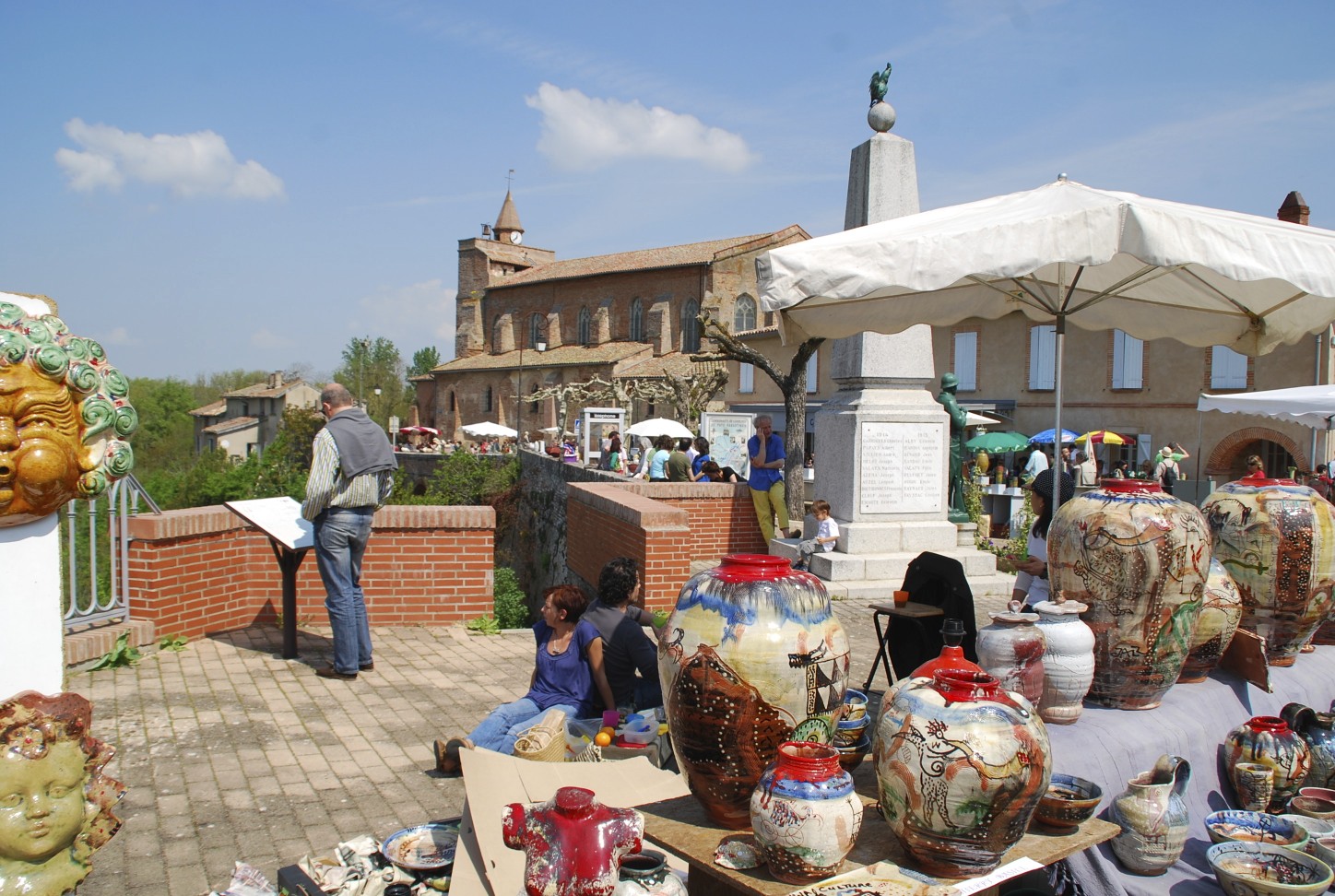
Market stand of ceramists recognized within the profession. Urns made of glazed earth, with unique decorations—in this respect similar to non-utilitarian or low-utility works—are displayed alongside utilitarian pieces (bowls, plates, etc.)
Source: Flora Bajard.
Firstly, in concrete terms, heteronomy is visible because quests for autonomy are generally realized through a concomitant logic that consists—not without ambivalence—in seeking material support and symbolic recognition from outside sources of authority and legitimacy. Within the sociology of professions in general, and in the work of Andrew Abbott in particular, protection of a professional territory is made possible by a struggle that unfolds in places of work, relations with the public, and interactions with the state. Thus, this perspective highlights the roles of various “audiences” which are themselves not united (colleagues, the public, the state) in the dynamic process of constituting a professional territory (Abbott 2003). I will focus on certain segments of the field of power—ministerial administrations and judicial authorities—that are central to the quest for autonomy of the professional group I am studying here.6 Secondly, heteronomy becomes manifest when principles directly threaten the norms of the group. Whereas Bourdieusian sociology designates heteronomy by reference to the bodies of power—in particular, economic power—that influence a field, in this article, the notion is understood in terms of the object it relates to: either the professional group or the artistic field. This distinction is important, since the logics of ceramists do not always match up with those of the artistic field. For example, while responding to outside demand appears as a principle characteristic of the heteronomous pole within the artistic field, it constitutes a perfectly legitimate logic within the professional group of ceramists, where working for the client is an integral, and valued, accepted practice.
This difference between the logics of the artistic field and those of the professional group invites us to explore the intriguing configuration in which the professional group is located: on the one hand, there are logics constitutive of the artistic field (inspiration, originality, abstraction, vocation, economic disinterest, expression of an interiority, signing of works, non-utilitarian products, etc. (Bourdieu 1980, Moulin 1983.) On the other hand, there are artisanal principles that agents of the artistic field are initially positioned against: the importance of know-how and techniques of the trade; the externality and objectivity of criteria of evaluation; functionality of the object created; response to outside demand, etc. To put it briefly, this profession gradually became codified in the second half of the twentieth century7 by simultaneous attraction towards the artistic field and opposition to its nomos, its fundamental law and the principles of division that characterize it. It is this very particular and ambiguous form of autonomy of the professional group with respect to the artistic field that I propose to examine in this article, by connecting the example of artistic ceramists to notions derived from the Bourdieusian theory of fields. Since the struggle surrounding the nomos of the artistic field takes shape at its margins, the interlinking of logics of autonomy and heteronomy within this professional group (with respect to the artistic field) is especially visible there, at the same time driving developments within the group.
The findings I present here are the result of doctoral research on artistic ceramists that I completed in 2014, and they are primarily based on observations made during fieldwork carried out where ceramists live (at ceramists’ villages, social gatherings in homes, etc.) and work (exhibitions, professional meetings, etc.) and sixty-two semi-structured interviews. Some of these interviews were with heads of associations and institutions; the other forty-eight were with ceramists, for the most part living in rural areas in different parts of France. Thirty of those interviewed were men, and twenty-three women; they began practising in different periods (four in the 1950s, twenty-three between 1970 and 1989, and twenty-two after 1990) and under various professional categories, using a variety of techniques and aesthetic conceptions. In addition to ethnographic inquiry, the research is also based on the results of a survey (218 respondents, or ten per cent of the population of professional ceramists) as well as on professional documentation (trade union archives, association reports, communications materials, etc.).
The first part of the article will allow us to distinguish the autonomy of the professional group from the autonomy of the field, in order to ultimately demonstrate that this group is subject to a very particular form of autonomization, one that makes this space a “satellite” of the artistic field. The second part will show that in these conditions, autonomization involves repeated confrontations with heteronomy, through recourse to the law and the court system.
1. Autonomy of Groups, Autonomy of Fields: The Dependences of a Satellite Professional Group
Although the space of artistic ceramics is highly autonomous, it maintains forms of dependence on and tension with the artistic field: it gravitates around this field and draws on its nomos, while at the same time being constructed in opposition to it. The autonomization of this professional group thus becomes the site of the struggle over the power to define the norms and boundaries of the artistic field itself.
1. 1 The Creation of Artistic Ceramics and its Roots in the Artistic Field.
Prior to the middle of the twentieth century, “artistic” ceramics did not exist as a specific collective activity constructed around a body of shared norms. The profession was “invented” in the mid-twentieth century, when a first generation of creators—for the most part, people who had gone to art school and were equipped with what Bourdieu calls “cultivated disposition”—decided to “make art” out of clay (Bajard 2014). In other words, it was the “artifaction”—that is, the “transformation of non-art into art” (Heinich & Shapiro 2012) of earlier professional practices (production of ceramics in factories, family workshops, and industrial or semi-industrial manufacturing) that gave birth to this new professional group by distinguishing it from those other activities. Beginning in the late 1940s, technical, aesthetic, and ethical professional norms were gradually defined and, especially from the 1960s, the codes of artistic ceramics became anchored in institutions and were made objective in structures, objects, and symbols: there were specific classes and training for students of ceramics, a trade association (Ateliers d’art de France [AAF]8), networks for exchanging experience and knowledge (meetings, markets, and commercial or festive events), written material (books, journals), and symbols (awards and prizes). In the 1980s and 1990s, professional associations were created (twenty of which are grouped together in the Collectif national des céramistes, thus bringing together around 750 workshops), and even a support system to help ceramists deal with risks and challenges. Professional associations are the most common type of structure to which ceramists belong, followed by the AAF and other creators’ associations, and through these bodies, which both represent the group to the outside world and regulate it internally, the group is highly self-organized. Finally, professional norms are made concrete through a set of material as well as immaterial elements, thus forming a true professional culture with powerful social effects. For example, there is a trade dialect’ that expresses the group’s internal cohesion, and these professionals consider themselves part of a “we,” that is, a collective identity forged around ethical values (solidarity, conviviality, equity, and humility) that they see as distinctive and characteristic of the group. Thus, through this body of practices, representations, and material elements, the craft of ceramist has given rise to a true “artistic community” distinct from other professions and amateurs because it has its own codes and “specific skills,” as well as a “consensus about the nature and particularities of this skill” (Moulin 1992: 256).
Neither the history nor the current situation of artistic ceramists can be understood independently from the larger space of the artistic field. First, ceramists—and one segment of them in particular—are an integral part of this field: the profession was founded by creators who came from the art world (see above), and it still includes people who develop their craft in spaces central to the artistic field (galleries, contemporary art fairs, etc.). Moreover, several principles connected to the most autonomous pole of the artistic field constitute an effective resource within artistic ceramics. Indeed, the official professional rhetoric of the group consists in eschewing the “general law” (Bourdieu 2015a: 599) of economic interest (the work is a calling or a vocation), as well as the authorities in the field of power that decide on artistic professionalism, forms of “institutionalized consecration granted by a power acting in the field but strongly connected to powers outside of the field” (Bourdieu 2015a: 603). Thus, having very high earnings or receiving recognition from the regional offices of the ministries of culture or crafts (for example, the title of “Master of Art” awarded by the Ministry of Crafts) does not represent the ultimate mark of professionalism for artistic ceramists.
In addition, resources are generated within the group by members frequenting certain artistic and cultural spaces: for example, some ceramists are particularly successful in positioning themselves within the professional space by appropriating external practices such as contemporary art or design. Similarly, the main prizes and distinctions for artistic ceramists are awarded to professionals, usually of the younger generation, who lay claim to training, inspiration, and practices borrowed from the plastic arts, design, or contemporary art.9 Thus, through aesthetic references, discourse, and commercial practices, the most “ratified” segment of this professional group is clearly embedded in the artistic field, at the pole where its specific capital is concentrated.
Belonging to the artistic field can also be observed negatively, in forms of distinction (distinction is only necessary when there is real or supposed proximity): artistic ceramists strongly distinguish themselves from designers, visual artists, and other contemporary artists who might occasionally use clay as one medium among others in performances or temporary installations, for example. On the other hand, they make it a point of honour to use clay as an integral part of their activity, which involves mastering (sometimes very complex) techniques of shaping and firing as well as the chemical composition of glazes and enamels. Thus, ceramists are not outside the artistic field, but they are also not recognized as fully belonging to it, for even as they aspire “to belong,” we shall see that they also refuse to be completely subjected to its specific laws.
1.2 Artistic Ceramists: Between Art and Craft
In France, the status of artist and the legal definition of a work of art are based on a set of markers that include the non-utility and non-purposiveness of works of art (which “contain their own purpose”—that is, their only purpose is their non-purpose10), originality,11 and finally, the fact of being unique, signed, and entirely created by an individual, which are considered components of originality.12 These criteria are used by the Directions régionales des affaires culturelles (DRAC) and the Maison des artistes (MdA) to determine who receives grants or the status of artist. The former, as regional institutions charged with implementing the policies of the culture ministry at the local level, and the latter, an organization in charge of administering artists’ status and rights to social security in France, both represent central sources of authority on art and culture.
This tension is very important, for although this professional group reproduces certain aspects of the capital specific to the artistic field, and although a large majority of those surveyed consider themselves to be outside of traditional forms of craft (the food or building professions, for example13), the total “ratification” of professional practices does not represent an ultimate or unique goal. Artisanal logics constitute an ethical norm shared (at least publicly) by most ceramists, including those who only make unique pieces or sculptures, or who have the status of artist. In addition, there is a whole segment of ceramists who base their professional value on what might be considered the most noble aspect of the craft: a politicization of their work, which aims to provide clients with “quality of life” (making “beautiful and useful” things for “people’s everyday lives”14); thus, responding to client demand is also a noble task. More broadly, economic proficiency is a measure of professionalism and seriousness, and, paradoxically, of deep commitment to the vocation. Because of this fundamental dissonance between professional norms on the one hand and the legal norms that public cultural institutions draw on, artistic ceramics cannot be considered an artistic sub-field, that is, “a relational sub-space that operates as a miniature field” (Marchetti 2002: 24). Of course, there are dissonances within sub-fields as well as between them, since “artists from opposite sides might even have nothing in common other than their participation in the struggle to impose opposing definitions of literary or artistic production” (Bourdieu 1991: 7). However, ceramists do not seek to impose and valorize one part of the specific capital of the artistic field over and against another part of that capital; rather, they bring in a norm that is in total contradiction to one of the principles constitutive of the nomos of the artistic field—that is, the functionality of their creations. In fact, and to summarize, to be a professional in contemporary French ceramics—and, even more, to be a “big name”—means both setting oneself apart through one’s artistic originality and giving importance to aesthetics, and mastering the difficulties and technical requirements of the material in order to create fully functional objects. For this reason, because the group’s norms imply combining art and craft without giving up either component, this professional space cannot be related to a weak field (Vauchez 2008:136; Vauchez & Georgakakis 2015). A weak field is a space that is scarcely unified or institutionalized, and whose boundaries are porous (idem), and it exists at the interstices of historically constituted fields. Its specific capital comprises the capitals proper to the spaces connected to it, and if they are contradictory, they are used strategically depending on who the audience is or what is at stake (Sacriste 2014: 55). Among ceramists, the two types of capital—artistic and artisanal—cannot be separated, and artistic ceramists defend, both individually and collectively, a unifying definition of creation that aims to erase the dichotomy between art and craft.
1.3 A “Satellite Space” of the Artistic Field
Of course, this profession could be considered a sub-field if we use the concept in a more flexible and approximate way and define it as a space “included in a larger space and under its domination but which, in certain respects and under certain circumstances, succeeds in partially escaping its power of imposition” (Dozo 2009). But then the notion no longer tells us much about the tensions that run through this space. We find the same difficulty with the notion of hybrid space, which contains the idea of syncretism or a synthesis of different spaces,15 thus defining the profession negatively: it is neither totally art nor totally craft. Therefore, considering artistic ceramics as an artistic sub-field or as a hybrid space within an approximative conception does not allow us to think through the agonistic nature of the relations between the professional space and the spaces related to it. For—and this is crucial—artistic ceramists do not only situate themselves “between art and craft”: some of them (both individuals and the organizations that represent them) struggle against some of the most legitimate and constitutive norms of the field in which they seek to be recognized. Thus, it is also difficult to apply the concept of simili-field to this space, for whereas for amateur writers the literary simili-field constitutes “a universe of consolation, which provides institutions intended for aspiring writers” (Poliak 2006: 244-245), ceramists master the rules of the legitimate culture and believe they legitimately belong to it. First, some of the ceramists surveyed seek to demonstrate the artistic nature of certain works or practices that the DRAC or the MdA consider artisanal, and to contest the criteria for defining works of art, which are supposed to be “useless” or “purposeless.” Here we find a traditional opposition within the cultural field, one that impacts the definition of a legitimate artist and is expressed in the struggle between two forms of legitimate art: art with no purpose and functional art (Bourdieu 2015a: 631). Second, some ceramists contest the cultural hierarchies that ascribe higher cultural value to art than to craft: professionals who are closest to the craft world try to defend the cultural value of their artisanal work and to justify it being overseen by the ministry of culture.
Fig. 2

Two logics of transformation of the artistic and cultural fields promoted by ceramists.
Source: Flora Bajard.
We see that the professional group is made up of those who seek to enter or uphold the field and to subvert one of its essential definitions: the definition of art. The notion of a “satellite” space seems to be capable of synchronically combining these dimensions of attraction and independence. On this reading, the professional space of ceramists is attracted by the artistic field, since it was created in relation to it and continues to gravitate around it, even though this space has its own internal coherence that partially contradicts that field.
2. The Law as a Tool of Negotiated Heteronomy: How the State Shapes the Autonomy of the Group
The logics of autonomy and heteronomy are in fact intertwined: there are various forms of encounter with heteronomy (informal interviews, letters, requests for funding, etc.), but the most visible form, with the greatest effect on professional norms, is the use of the law and the courts. The goal is to influence the legal and institutional definition of art in France, which matches up with the rules of the field of art.16 Thus, each of these counters constitutes a bet made by the professional group on its ability to negotiate a heteronomy adjusted to its understanding of its activity, and this takes place through an attempt to extend the boundaries of the artistic and cultural field.
Among ceramists, distrust of public institutions is expressed in the accusation that the institutions linked to the ministry of crafts downgrade craftwork to folklore, and in criticism of the contempt that professionals experience from institutions connected to the artistic domain. However, this attitude goes along with a quest for recognition, which is expressed in individual challenges to certain decisions by the MdA, to remove or to not admit certain professionals, and by the struggle—also individual—to obtain grants from the DRAC. These claims generally have more to do with symbolic stakes than with the material benefits associated with the status of artist—which is more advantageous than other categories of independent worker in terms of social security contributions, for example—or the financial support that these institutions might provide. This attachment to symbolic stakes has much to do with the social properties of ceramists: well endowed with cultural and academic capital, these professionals, for the most part, keep their distance from a social trajectory that would lead to economic or symbolic success. On the contrary, they determine their trajectory by focusing on the artisanal dimension of their work, which they associate with modesty and a humble lifestyle and practices. The decision to turn to make use of the legal system is thus the result of a complex and ambiguous relationship between the legitimate culture and individuals who are familiar with it but are partially excluded from it as a result of their professional activity, which feeds a strong feeling of injustice, humiliation, and at bottom, a lowered status.17 In order to act on this criticism, the trade association AAF as well as some independent ceramists have turned to the courts. This involves, on the one hand, judicialization of the problems they face (court cases), and, on the other hand, juridification (mobilisation of existing legal norms and attempts to transform them) (Pélisse 2009).
2.1 Judicialization: Cases Against the Maison des Artistes
By determining who is an artist (and by distinguishing those who are from those who are not), the MdA delivers “something that serves as a professional certificate, even though the text of the law carefully avoids this term” (Moulin 1992: 394). Entry into the art world is achieved by submitting to the criteria of the artistic field: “those who are excluded do not succeed in being recognized as creators unless they submit to the definition of the work of art as ‘original’ and ‘useless,’ and by entering networks and exhibiting in adequate spaces (Becker 1978)” (Moulin 1992: 267). This explains why, of the 28 per cent of survey respondents who practise as artists, many have fiddled MdA regulations in order to be affiliated with it—for example, by only presenting sculptural or plastic pieces, by hiding the utilitarian aspect of their creations, or by presenting drawings or paintings and being officially registered as painters. Other tactics used by some ceramists are, on the contrary, characterized by conflict: beginning in the 1980s, after having been rejected or banned on the grounds of the “artisanal” nature of their works, some professionals launched individual cases against the MdA.18 The first case, in 1979, lasted four years, from the decision delivered by the Social Security Commission, the court of first instance, down through various appeals before an appeals court and the Cour de cassation. The disputes had to do with the definition of the originality of objects judged to be functional or utilitarian: the criterion of utility came to be seen as counter to the criterion of originality. This was also the grounds for rejecting another ceramist’s affiliation with this social security regime in 1983: the court wrote that “ceramic works with functional purposes were not works of art,”19 and issued an opinion stating that this ceramist practised “a craft profession.”20 Some time later, other judges emphasized that, on the contrary, the notion of originality can only depend on the objective criteria established in the Tax Code: the work must be unique, hand-made, and signed. More recently, in 2006, another ceramist was banned from the MdA a year and a half after being admitted, on the grounds that he too practised a “craft profession;” he then opened proceedings against the organization. The court pointed out that the laws to which the MdA was required to refer “do not refer to whether creations are utilitarian or not,” and thus required the immediate re-admittance of the professional to the social security body. Thus, in each of the cases I studied, judicial authorities vindicated ceramists, as in the following verdict delivered in 2009, which specified that the fact that X’s works “take the form of useful objects does not necessarily mean that they are not original, unique, entirely hand-made by the artist, and signed by him.”21
Thus, in each case, professional ceramists fought to have their legitimacy as artists who work with clay and “practise their art on pots”—as one article published in La Revue de la céramique et du verre22 puts it—recognized. These legal proceedings—I counted at least five between 1979 and 2009—represent one form of positioning vis-à-vis cultural institutions that emerges from the professional space: the attempt to demonstrate the artistic nature of utilitarian work, and, by extension, to challenge the classic criteria separating art from craft. These individual cases also demonstrate phenomena of collective mobility within the profession: the benefits in question amount above all to the symbolic requalification of the work and status of these creators, which sets a precedent. Moreover, these fights to obtain or maintain affiliation with the MdA were publicized and circulated within the professional group, both through oral history and informal narratives—for example, at festive or commercial events—and in La Revue de la céramique et du verre. Many ceramists share an opposition to the principles of vision and division that define the world of art and craft, although not all ceramists have had to personally face what they perceive as affronts.
2.2 The Juridification of the Cause: Transforming Existing Norms
From in the 1970s, proposals began to emerge for a new status, that of the “creative” artisan d’art, in order to make up for The Chambers of Trades and Crafts23 non-recognition of the particularity of artisans d’art [artistic craftspeople] and their difficulty in accessing the MdA. Those who advocated for this status—in particular the trade association AAF and the Fédération nationale des ateliers d’art—in order to bring together the activities of artisans d’art and of artists, were not successful.24 Twenty years later, the idea was again taken up by the AAF. In 2013, the president of the AAF and its director of operations, with the assistance of experts in social security law, business law, and taxes, submitted a summary note to the cabinet of the French prime minister at the time, Jean-Marc Ayrault. In it, they tried to show the creative dimension of artistic craftwork and to defend the idea that “the artistic craftsperson creates original works that ‘bear the imprint of the personality of their author’” (Audugé 2013: 2). To do so, they drew in particular on the Intellectual Property Code, which does not mention the notion of utility (see above) (Audugé 2013: 6). AAF also asked for tax regulations to be changed to abolish the distinction between “pure” and “applied” art. Finally, one of the main suggestions of the summary note was to establish a “simple presumption of eligibility for the social regime of author artists, to benefit the artistic craftspeople referred to in the annex of the decree of August 12 2003, which established the list of craft professions” (Audugé 2013: 11). Thus, without denying or abandoning the notion of craftwork, the report sought to demonstrate its artistic value and to include the craft professions in artistic public policies. Also in 2013, the AAF, in collaboration with the permanent assembly of chambers of trade (APCMA) and the National Union of Craft Professions (UNMA, an outgrowth of the AAF) wrote a parliamentary amendment seeking legal recognition of the craft profession sector which was included in the Craft, Commerce, and Very Small Businesses Act, the so-called “Pinel law.” This law, which the trade association called “historic,” went into effect on 19 June 2014 and included two essential elements: first, recognition of the existence of the craft professions as an economic sector, and second, recognition of the artistic aspect as a particularity of the craft professions (artistic craftspeople were henceforth “creators”). In addition, the decree implementing this law, which was published in the Official Journal in January 2016, established the list of craft professions [métiers d’arts] (which replaced the list of professions of craft art [métiers de l’artisanat d’art]), suggesting that these activities were no longer necessarily classified as craftwork. Finally, the Freedom of Creation, Patrimony, and Architecture Act, which was voted on in 2015 and adopted by the Senate on 29 June 2016, supplemented the Pinel Law by specifying that the newly established list of craft professions “does not prejudge the professional status of those individuals practising one of the activities listed. These individuals may also be, in particular, employees of craft businesses or any other legal entity practising a craft profession, a liberal profession, bureaucrats, or author artists” (Article 14D).
It is beyond the scope of this article to show the various factors that explain the relative success of this mobilization via the law, beginning with the trade association reorienting its tactical repertoire in the 2000s, combined with a general context of the restructuring of social security agencies.25 In any case, contrary to autonomization as understood by Bourdieu—a process carried out by agents situated in the most autonomous spaces, that is, the furthest from political and economic power—the autonomization of the group is generated, instead, as in Abbott’s theory, by a leader organization occupying a privileged position at the intersection of the professional and political arenas (Morel 2016: 316).
Fig. 3
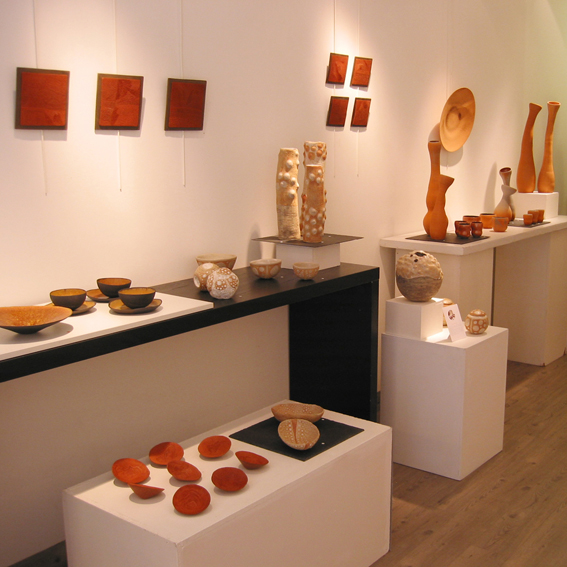
An exhibit at a Toulouse art gallery with the theme “orange.” The combination of site, scenography, and the objects displayed—essentially containers that are more or less functional but are unique or created in very small sets—blurs traditional criteria of art and craft.
Source: Author’s personal photo.
Conclusion
Distinguishing the notion of autonomy in relation to the notions of field and its various forms shows that autonomy can be fully effective within a professional space, even when the space is not necessarily free of tensions and dependencies. Thus, the state, through its various sectors (ministerial cabinets, parliamentary work, courts of law) and their specific modes of action (bureaucratic, political, legal), produces diverse effects that are never determined in advance even if, today, certain public interventions end up supporting and reinforcing the group’s logics of autonomization. The solidity of this social entity is thus in part linked to the success of various bets made at its boundaries, within connected ecologies rather than at the centre of the group (Abbott 1995). Without totally depriving the group’s representative or regulatory organizations of their symbolic power to decide on the professionalism of group members, these individual and collective procedures attempt to create an official framework in which professionals can continue to develop their understanding of their work.
The imbrication of autonomy and heteronomy is especially visible in the case presented here, since it takes place at the boundaries of the field, where the struggle over definitions and their potential renewal is strongest. Indeed, whether it is a matter of judicialisation or juridification, we observe within the logics of those who belong to the professional order of ceramists (and the craft professions in general, via the AAF), a specific principle of recognition quite distinct from the nomos of the artistic field. In other words, the situation is not one in which “corporate effects” and “field effects” “make sense together, both in order to contribute to the autonomization of the artistic field and in order to be at the root of the forms of competition within it” (Willemez 2015: 136-137). Instead, there is a struggle at the borders that aims to enlarge this field by subverting part of its nomos. Furthermore, in publications such as La Revue de la céramique et du verre, as well as in interviews, the opinion is expressed that those professionals who have accepted the criterion of non-utility are “cheaters” who conformed to the nomos in its entirety, whereas those who opposed it are held in high esteem. This phenomenon indicates a central aspect of the struggle: it is not only a matter of entering the field of art (or of legitimate culture), but also, in a logic of subversion, of entering by changing the rules of the field—and, more specifically, of reintegrating the notions of functionality or “applied art.”26